.png)
Mr.Gway Says
Huoshan gonghuang — A Cup of Warmth in the Smoke and Fire of Life
If green tea is like fresh rain in a mountain stream, white tea like a clear breeze under the moon, and black or red tea like a roaring fire or fiery liquor, then yellow tea is a bed of glowing embers—neither scorching nor fierce, but gently warming your palms, and your days.
It tucks its sharpness away within the innovation of its fermentation craft, keeps its crispness for the tip of your tongue, and leaves the lingering sweetness for your heart. It is like an old storyteller who speaks slowly, or like a young soul who lives life as if writing poetry.
The “yellow” of Huoshan gonghuang is not the loud brightness of gold, but the aged silk hue born of smoke and fire. It steps back from the greenness of green tea, and during the steaming and fermentation process, meets the heat and humidity halfway—softening its edges and growing mellow. Much like people, only after life has “steamed” us a little do we learn to fold our sharpness into gentleness.
On the palate, it lacks the green tea’s “freshness that strikes the throat,” and the black tea’s “density that weighs heavy,” choosing instead to lay a velvet carpet across your tongue, sending its warmth smoothly down to your stomach—like a bowl of hot soup a mother hands you without a word, or a quilt sun-warmed on a winter afternoon.
Then, the magic—gentle and for all ages—happens: children drink it without frowning at bitterness, tasting only a faint roasted sweet-potato note; adults drink it as if handing their overworked stomach a soft towel after a banquet; the elderly drink it as though leafing through old photographs washed in a warm sepia tone, even their sighs becoming lighter. Yellow tea doesn’t choose its drinker, because it is life itself—full of everyday warmth without the choke of smoke, mild to the point of seeming plain, yet hiding a quiet surprise of sweetness in its simplicity.
The best setting for Huoshan gonghuang is not the formal tea table, but the fabric of daily life:
—Working late into the night, the rice cooker clicks off, and you brew a big enamel mug of yellow tea to go with leftover fried eggs—the “golden pairing.”
—After a weekend of housecleaning, bedsheets hanging on the balcony poles, you collapse into a rattan chair, tossing a handful of leaves into a glass and watching the sunlight turn dust into floating gold.
—Before the old house is demolished, neighbors gather with bamboo stools, the iron kettle bubbling, the amber-colored tea rich as liquid honey; you drink, you laugh, you swallow decades of shared history with each sip.
It doesn’t mind compromise: glass cups, thermos flasks, travel mugs, even enamel jars—it will always unfurl its leaves and release its flavor evenly.
Just like the most moving parts of life are not the ceremonial gestures, but the relaxed “ah, this will do just fine.” Yellow tea brews this ease for you: no need for fine vessels, no need for elegant rooms—only boiling water and a heart willing to slow down.
So, when life feels like damp firewood, smoldering and heavy, grab a handful of yellow tea. Let it wake slowly in the cup, like coaxing half-burnt embers back to glow. Watch the leaves rise and fall, like rice and oil simmering in the rhythm of daily life; breathe in its scent as if catching the distant aroma of a home-cooked meal. When the tea stains your fingertips gold, you’ll realize: the warmth of everyday life is not the choking smoke, but the yellow tea’s hint of stickiness, sweetness, and comfort—it smooths the rough edges of living, softens the heart, and turns all that is sharp, cold, and weary into a quiet thought: “It’s fine—tomorrow is a new day.”
Huoshan gonghuang is nothing more, and nothing less, than distilling the smoke and fire of the human world into tea, and handing it to you.
Surrounding the tea, there’s always more tea, just as at the end of the road, there’s always another road. This too mirrors the path and return of life.
May you,
Sway freely, and live on without end.
Huoshan Gonghuang
The History of Yellow Tea
Yellow tea, once a “golden tribute tea” exclusively enjoyed by emperors, was considered the “drink of gold and jade” reserved for royal use.
In Records of the Grand Historian by Sima Qian, it is mentioned that “on the mountains of Shouchun (Huoshan was once part of Shouzhou, hence referred to as the mountain of Shouchun) there is yellow bud tea, which can be brewed and consumed, and prolonged drinking leads to immortality.” This shows that Huoshan Yellow Bud tea was recorded as early as the Han Dynasty and was believed to have health benefits.
The famous tea sage of the Tang Dynasty, Lu Yu, also mentioned the tea produced in Huoshan in his Tea Classic. Additionally, Princess Yuzhen, the sister of Emperor Taizong, created “Baiyun Temple Buddha Tea,” which was named “Bao’er Zhongxiu” by the emperor, and included in the imperial tribute, symbolizing the affectionate bond between the royal siblings.
In the Ming Dynasty, Xu Cishu wrote in Tea Treatises: “Famous mountains in the world always produce miraculous herbs. North of the Yangtze River,
Huoshan County produces the most tea, and its reputation is widely known in the south; people from Shanxi and Shaanxi also use it. People in the south say it can remove grease, clear stagnation, and is highly treasured.” This highlights that Huoshan has long been an important source of yellow tea, emphasizing its health benefits.
In fact, yellow tea has a history of cultivation and production in several regions across China, including Hunan, Sichuan, Anhui, Hubei, Zhejiang, and Guangdong.
However, in more recent times, especially after the classification of the six major tea types, yellow tea has become less well-known. The production process is complex, requiring precise temperature and humidity control during the “yellowing” stage, which is time-consuming and labor-intensive, making it costly. Furthermore, the taste of yellow tea is milder, lacking the strong fragrance of green or oolong tea, and the rich depth of black or red tea. Additionally, due to limited brand promotion and market education, yellow tea remains relatively unknown. Nevertheless, in recent years, some passionate tea masters and enthusiasts have been working hard to revive yellow tea by restoring traditional tea-making techniques.
The Growing Environment
Huoshan County is located in the western part of Anhui, deep in the Dabie Mountains, and along the upper reaches of the Pei River,
a primary tributary of the Huai River. This yellow tea is harvested from an ancient tea garden on the highest peak of Huoshan, at an elevation of around 1000 meters. The mountains are high and shrouded in mist, with abundant rainfall, high humidity, and lush vegetation. The soil is loose and fertile, and the ecological environment is excellent.
Upon the highest peak of Huoshan, the earth holds its warmth while the air remains austere, the soil deep and generous. Even in the height of summer, layers of chill linger in the breeze. From such a land is born a tea both pure and gentle, mellow and sweet, whose spirit flows clear—never yielding bitterness, even in the longest steep.
The Production Process
Yellow tea has always required very meticulous production techniques, where even the slightest mistake can ruin the entire batch.
In the Da Guan Tea Treatise, Emperor Huizong of the Song Dynasty wrote: “The quality of tea depends greatly on how the buds are steamed and how long they are pressed. If steamed too little, the buds will be smooth, making the tea green and bitter; if oversteamed, the buds will break apart, resulting in a red tea that lacks thickness. If pressed too long, the flavor will be weak; if not pressed long enough, the color will be dark and the flavor astringent.”
Huoshan Gonghuang follows ancient tea-making traditions, elevated by modern craftsmanship. Through unidirectional airflow, precise multi-stage temperature control, and 15 to 20 days of slow fermentation, the tea undergoes deep transformation. Only carefully picked one bud with two leaves — harvested around the Grain Rain season — are used. The leaves are gently steamed using traditional methods to preserve their vitality and remove excess coldness. Fermentation in small bricks ensures even aging and rich, layered flavor
The result is a tea that is subtle and restrained, but very beneficial for health—this is Huoshan Gong Huang.
The Taste
Yellow tea is known for its health benefits rather than its strong aroma or bright color.
This yellow tea has a golden, translucent liquor with a delicate yet rich and sweet flavor. It is free from bitterness or astringency, offering a caramel sweetness with notes of roasted sweet potato. After brewing, it develops a grainy, cereal-like aroma.
The beauty of yellow tea lies in its quiet charm. It doesn’t compete for attention, but those who understand it will find it captivating and unforgettable.
The Health Benefits
The yellowing process of yellow tea oxidizes chlorophyll and brings out tea pigments, making it a tea with a quite high concentration of theaflavins. During the production of Huoshan Gong Huang, the moist heat converts the leaves into a form rich in these theaflavins, which are known as “soft gold” in tea. These compounds are effective in promoting antioxidant and anti-inflammatory effects, lowering blood lipids, combating viruses, inhibiting tumors, improving insulin sensitivity, reducing bad breath, aiding digestion, improving gastrointestinal health, and relieving bloating and acid reflux. It is truly a friend to the spleen and stomach.
In our tests, thanks to its high theaflavin content even after being steeped for more than ten consecutive days, Huoshan Gonghuang remains mold-free,which reflect its remarkable anti-inflammatory and antibacterial properties.
Regular consumption of yellow tea can help alleviate common health issues such as high blood pressure, high cholesterol, and high blood sugar in modern adults. For children, daily consumption can help with digestion, reduce chronic inflammation, and be beneficial for those with early-stage coughs or nasal congestion. Beyond drinking, it can also be used for nasal and oral cleansing. .Due to its unique processing method, Huoshan Gonghuang has a mild and balanced nature, making it suitable for long-term consumption.If you feel a cold coming on, it’s also a good idea to drink this tea to help prevent it.
How to Brew Huoshan Gonghuang
Taste is a personal and subjective experience. We encourage a relaxed and flexible approach to brewing tea, adjusting the strength based on personal preference and health needs. Whether light or strong, yellow tea is perfect in any form—its elegance and subtlety suit all occasions.
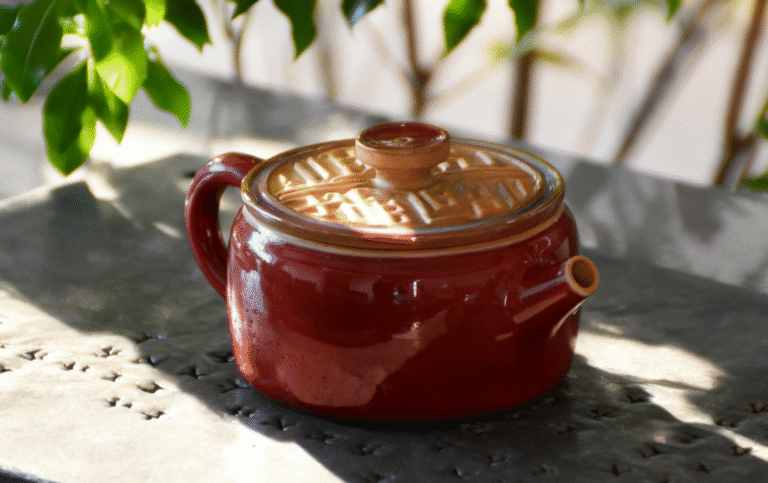
- If you have the time, brewing with a teapot will allow you to experience the full depth and layers of the tea’s flavor, while adding an element of enjoyment and charm to the process.
- Brewing Method of Huoshan Gonghuang:
- Choose a tea brewing vessel, preferably a ceramic gaiwan, to help retain heat and enhance freshness. The tea-to-water ratio should be 1:20~25, with 5~6g of tea for 120ml of water.
- Pour more than half the hot water into the gaiwan to pre-warm the vessel and the serving cup. Remember to swirl the pot gently before pouring
- For the first brew, pour in boiling water, no need to rinse the tea. Pour gently in a circular motion, then steep for 15-20 seconds before serving.
- For the second to fifth brews, steep for about 12 seconds, gradually increasing the steeping time as you continue.
- After around the seventh or eighth brew, you can switch to a thermos to continue steeping or use a kettle to brew until the flavor fades. The fragrance and taste of yellow tea are not as strong as green or oolong teas, so the health benefits are the real reward.
2.For busy office workers or families drinking tea at home, you can use a clean thermos to brew the tea directly.
- Thermos Brewing Method of Huoshan Gonghuang:
- Choose a clean, odorless thermos (500ml is ideal), adding about 3g of tea.
- After 30 minutes, you can enjoy the first brew, with a bright golden liquor that’s elegant and mellow. When half of the tea is consumed, refill with hot water and continue steeping for another 30 minutes. You can keep adding water and drinking the tea multiple times.
Upon waking, simply brewing a pot of yellow tea rich in amino acids and theaflavins in a thermos for the family to sip on throughout the day,could there be a small, quiet romance hidden in the everyday routine of life?
About Water
Water is the mother of tea.
Since the time of the tea sage Lu Yu, tea connoisseurs have always placed great importance on the water used for brewing. In his Tea Classic, Lu Yu discusses water types, saying, “Mountain spring water is best, followed by river water, and well water is the lowest quality.” Many ancient texts also emphasize the importance of water, summarizing it in five key qualities: clear, flowing, light, sweet, and cool.
In modern times, it’s rare to find mountain spring water as described by Lu Yu. As a substitute, we recommend using pure water, particularly high-quality mountain spring water.
About Tea Storage
Follow the fundamental principles for preserving all types of tea: airtight, away from light, moisture, and odors.
A clip is included in the canister—use it after opening to expel air and keep the tea sealed. This helps prevent dampness and oxidation.
With good storage, tea keeps well over time.Fresh tea is fragrant and sweet; aged tea is mellow with rich, lasting flavor.
Customized Service
We offer bespoke gift sets, crafted to hold the very moments of beauty and warmth you long for.
Give it to:
The one who devours books with unquenchable curiosity,
The one who walks beside you, sharing cups and laughter,
The one you find again in a fleeting glance amidst the lights,
The one whose wisdom is etched in every line upon their brow,
Give it to all those you cherish in this world…